Air Conditioning Repair on Long Island.
By Island Comfort HVAC · Updated July 2026
When your AC stops working on a 90-degree July afternoon in Nassau County or Suffolk County, you need fast answers: what broke, what it costs, and whether repair or replacement makes more sense. This guide covers all of it — from the six most common AC failures on Long Island to the repair-versus-replace decision, salt-air corrosion on coastal homes, and what same-day service actually looks like.
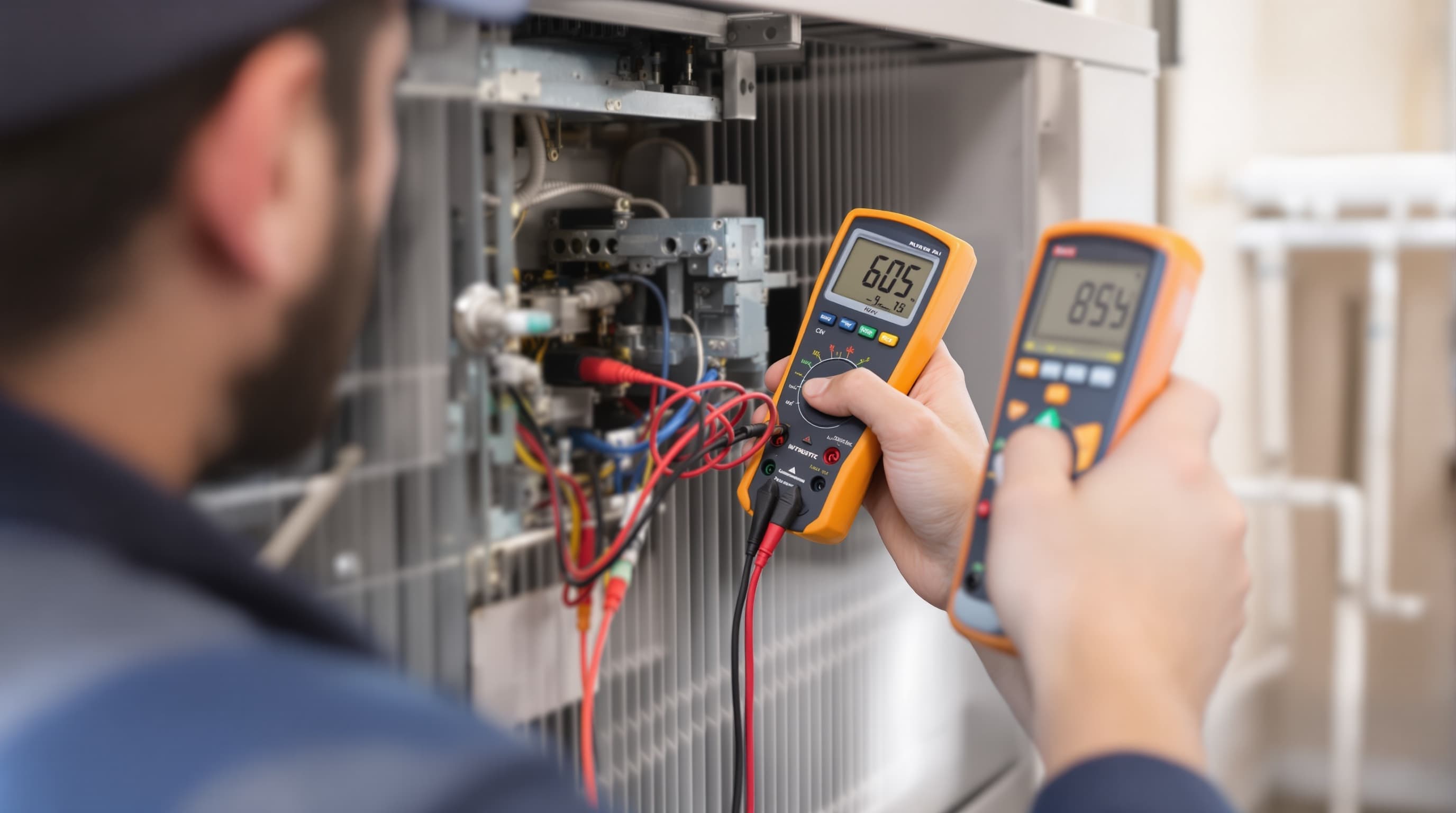
AC Repair on Long Island: What Makes It Different
Long Island's air conditioning repair market has quirks you won't find in most of the country. The island sits between the Atlantic Ocean and Long Island Sound, which means coastal humidity and salt air accelerate corrosion on outdoor condenser units — particularly in communities along the South Shore and North Shore. Homes in Long Beach, Oceanside, Freeport, and Port Washington deal with significantly faster coil degradation than inland Nassau County towns like Hicksville or Levittown.
The housing stock also matters. A large share of Long Island homes were built between 1955 and 1985 with ductwork sized for older, lower-efficiency systems. When a modern high-SEER unit gets installed in older ductwork without proper static pressure evaluation, airflow restrictions cause frozen coils — one of the most common AC repair calls we run across Nassau and Suffolk County.
For air conditioning service across Nassau and Suffolk County, we provide same-day emergency repair 24/7, NATE-certified technicians, and upfront pricing before any work begins. Here is what to expect when you call for AC repair on Long Island.
Free HVAC Estimate on Long Island
No obligation. Mon–Sat 7–7.
Air Conditioning Repair Costs on Long Island
Most AC repairs on Long Island fall in the $75 to $450 range for common component failures. Here is a realistic breakdown of what you should expect to pay in 2026:
| Repair Type | Typical Cost | Notes |
|---|---|---|
| Capacitor replacement | $75 – $175 | Most common single-component failure |
| Contactor replacement | $150 – $250 | Often fails alongside capacitor |
| Refrigerant recharge (R-410A) | $150 – $350 | Must also locate and seal leak |
| Fan motor replacement | $200 – $350 | Condenser or air handler fan |
| Evaporator coil cleaning | $100 – $200 | Preventive; avoids freeze-ups |
| Condenser coil cleaning | $100 – $200 | Critical in coastal Long Island areas |
| Evaporator coil replacement | $400 – $800 | Often warrants system evaluation |
| Compressor replacement | $800 – $1,800+ | Rarely cost-effective on units >10 yrs |
These ranges reflect 2026 labor and parts costs in Nassau County and Suffolk County. Emergency calls (after-hours or weekend service) typically carry a $50 to $100 surcharge over standard rates, which we quote upfront before dispatching.
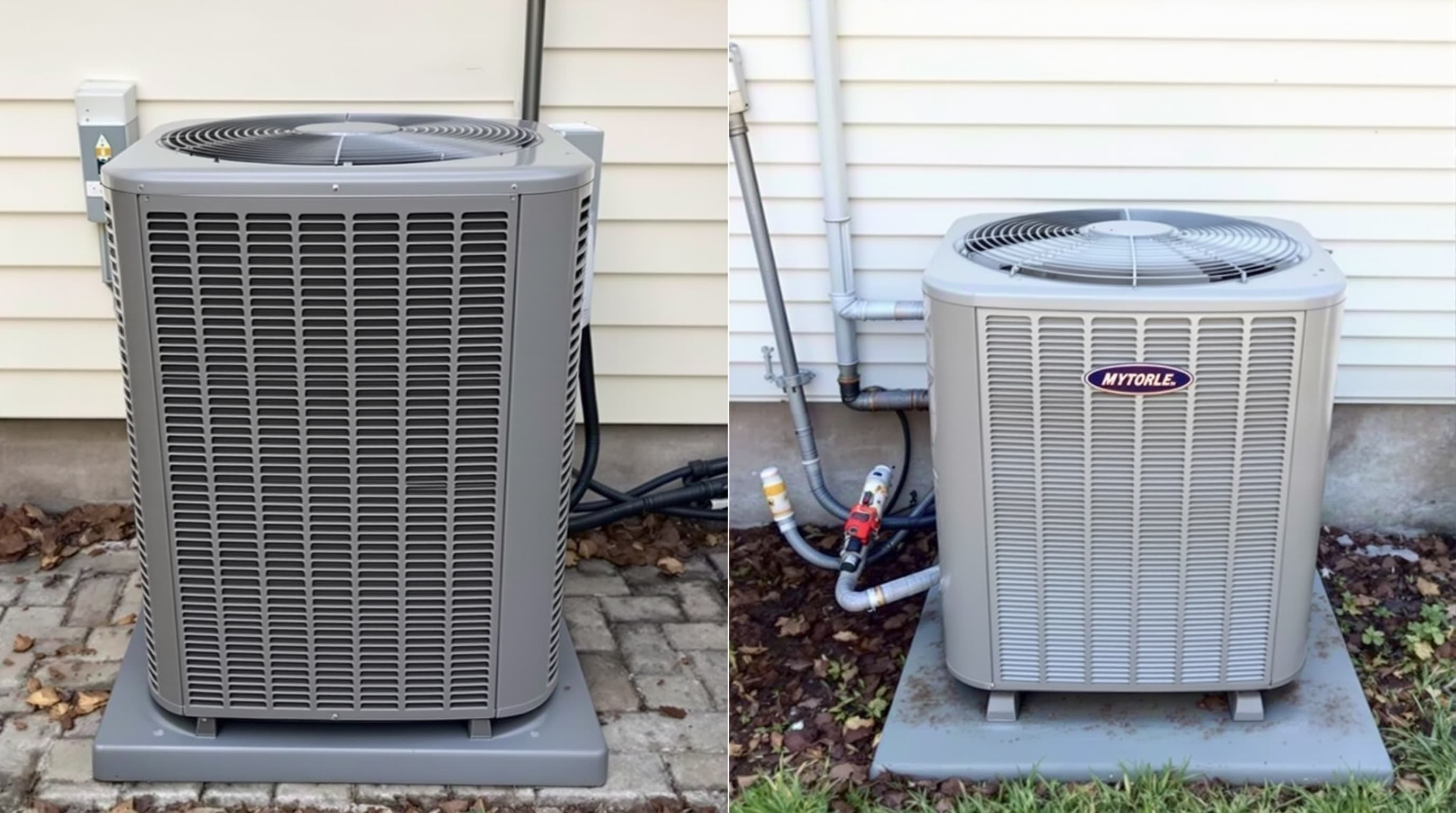
6 Most Common AC Problems on Long Island
Failed Capacitor
The capacitor starts and runs the compressor and fan motors. When it fails, the unit hums but won't start, or runs weakly. It's the single most common AC repair call on Long Island — inexpensive to fix ($75–$175) and usually a same-day job. Capacitors degrade faster in high-heat climates and age-out around 10 to 15 years.
Refrigerant Leak
Low refrigerant means the system can't absorb enough heat to cool your home. Signs include warm air from registers, ice forming on the refrigerant line near the air handler, and longer-than-normal cooling cycles. Coastal Long Island homes — especially near the bays — are prone to formicary corrosion on copper coils, which causes refrigerant leaks over time. Simply recharging without finding the leak is a temporary fix at best.
Frozen Evaporator Coil
A frozen coil shuts down cooling entirely and can damage the compressor. Causes: clogged air filter (most common), closed supply vents, or low refrigerant. First step: replace the filter and turn the system to 'fan only' for 2 to 4 hours to thaw. If it refreezes, the issue is likely refrigerant-related and needs a tech.
Dirty Condenser Coils
The outdoor condenser unit dumps heat from your home into the outside air. When the coils are fouled with dirt, cottonwood, or salt residue, the system can't reject heat efficiently — efficiency drops, run times increase, and the compressor works harder. Coastal communities on Long Island need more frequent condenser cleaning than inland areas. Annual cleaning is recommended for all homes within 5 miles of the water.
Failed Contactor
The contactor is an electrical switch that sends power to the compressor and condenser fan. When it fails, the outdoor unit won't turn on even though the thermostat is calling for cooling. Contactors are relatively inexpensive ($150–$250 installed) and often fail alongside the capacitor on older units. If we're replacing one, we typically check the other.
Fan Motor Failure
Both the outdoor condenser fan and the indoor air handler blower can fail. A failed condenser fan causes the system to overheat; a failed blower fan means conditioned air never reaches the living space. Symptoms: outdoor unit runs but no air comes from registers (blower), or outdoor unit cycles off quickly and outdoor fan is stationary (condenser fan). Fan motor replacements run $200–$350 depending on which motor.
Repair vs. Replace: How to Decide
The 5,000 ruleis the most practical guide for Long Island homeowners: multiply the unit's age by the estimated repair cost. If the result exceeds $5,000, replacement is usually the smarter investment.
Example: a 13-year-old AC facing a $450 capacitor and refrigerant recharge: 13 × $450 = $5,850 — lean toward replacement. A 6-year-old unit facing the same $450 repair: 6 × $450 = $2,700 — repair makes sense.
Beyond the formula, consider efficiency. AC systems installed before 2015 typically have SEER ratings of 10 to 13. Modern Carrier and Lennox units start at 16 SEER and go to 24 SEER. Upgrading from a 10 SEER to a 16 SEER system reduces cooling costs by roughly 37%. Over 10 to 15 years of Long Island summers, that savings adds up.
We will always tell you honestly if we think your system is worth repairing. We are not in the business of selling replacements to homeowners who just need a capacitor. If it makes sense to repair, we say so.
Need AC Repair on Long Island Today?
Same-day AC repair across Nassau and Suffolk County. NATE-certified technicians, upfront pricing, 24/7 emergency service. Most repairs completed in one visit.
Air Conditioning Repair Long Island — FAQ
How much does air conditioning repair cost on Long Island?
AC repair costs on Long Island typically range from $75 to $450 depending on the part and scope of work. A capacitor replacement — one of the most common failures — runs $75 to $175 including labor. Refrigerant recharge (R-410A) costs $150 to $350 depending on how much is needed. A contactor or fan motor replacement falls in the $200 to $350 range. Evaporator or condenser coil repairs are more involved, running $300 to $800. If a compressor fails on a unit older than 10 years, replacement of the whole system is usually the better financial decision.
What are the most common AC problems on Long Island?
The six most common air conditioning problems we diagnose on Long Island are: failed capacitors (the most frequent cause of a unit that hums but won't start), refrigerant leaks, frozen evaporator coils from restricted airflow, dirty or fouled condenser coils, failed contactors, and seized or failing fan motors. Long Island's proximity to saltwater also accelerates corrosion on outdoor condenser units, particularly in communities close to the South Shore and North Shore bays.
Should I repair or replace my Long Island air conditioner?
The 5,000 rule is a useful guide: multiply the unit's age by the repair cost. If the result exceeds $5,000, replacement is usually the smarter investment. For example, a 12-year-old AC facing a $450 repair: 12 × $450 = $5,400 — right at the borderline. A 15-year-old unit facing a $500 repair: 15 × $500 = $7,500 — lean toward replacement. A modern 16 SEER system will also reduce your cooling bills significantly compared to the 10-13 SEER units installed 15+ years ago. We'll always give you an honest comparison before any work begins.
How long does AC repair take on Long Island?
Most air conditioning repairs are completed the same day, typically in 1 to 3 hours. We stock common parts — capacitors, contactors, fan motors, run capacitors, hard start kits — on every truck, so most repairs happen on the first visit. Refrigerant recharges are also same-day. Parts that need to be special-ordered (specific blower assemblies, OEM coils for older units) may require a follow-up visit, usually within 1 to 2 business days.
Do you offer emergency AC repair on Long Island?
Yes. We provide 24/7 emergency air conditioning repair across Nassau County and Suffolk County. Call any time — our dispatch team keeps trucks staged in both counties so we can respond fast, especially on high-heat days when demand spikes. Same-day appointments are available 7 days a week for calls received before 2 PM. For true emergencies (AC out with elderly residents or medical equipment involved), we prioritize those calls.
Why is my AC running but not cooling the house?
An AC that runs but doesn't cool typically has one of four causes: low refrigerant (leak in the system), a frozen evaporator coil (caused by restricted airflow from a dirty filter or blocked return), a dirty condenser coil (outdoor unit can't reject heat), or a failing compressor. Start by checking and replacing your air filter — a clogged filter is the most common cause of a frozen coil. If that doesn't solve it, call for a diagnostic. Running an AC with a refrigerant leak or frozen coil can damage the compressor, which is the most expensive component to replace.
What causes AC refrigerant leaks on Long Island?
Most refrigerant leaks on Long Island are caused by corrosion on copper coils — a phenomenon called formicary corrosion triggered by the combination of copper, moisture, and organic compounds (including formic acid). Long Island's humidity and salt air from both the Atlantic and Long Island Sound accelerate this. The fix is to locate and seal the leak, recharge the refrigerant, and in some cases add a UV dye for tracking. If an evaporator coil is severely corroded, coil replacement is often more cost-effective than repeated recharges.